
This week we explain the all important structure and flow of an online floristry website: menus, navigation, product categories and other important issues. A website is more than a collection of nice pictures, it has to be trustworthy and easy to use!
Your new website will have three major navigation elements:
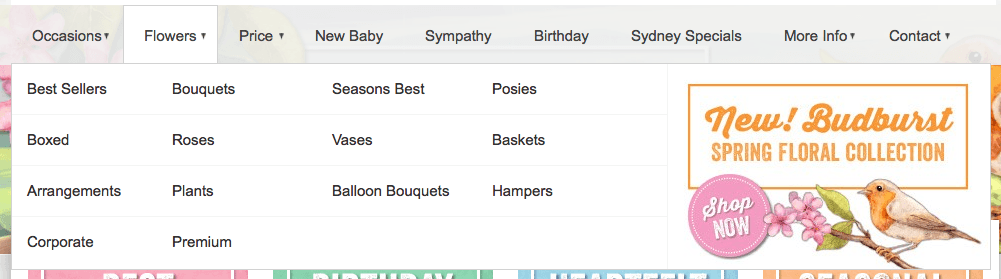
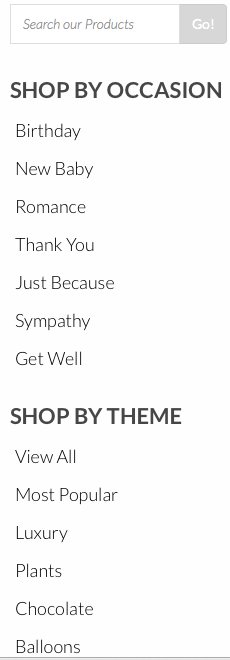
This is the primary navigation method for your website and is most commonly on a Florists website:


On many sites we use the common flower categories across the main menu with the most common categories:
We have found that one of the most common ways that people search through a florist website looking for products is the shop by price categories. Choosing these price categories will define the price market of where you will set your online business for the future.
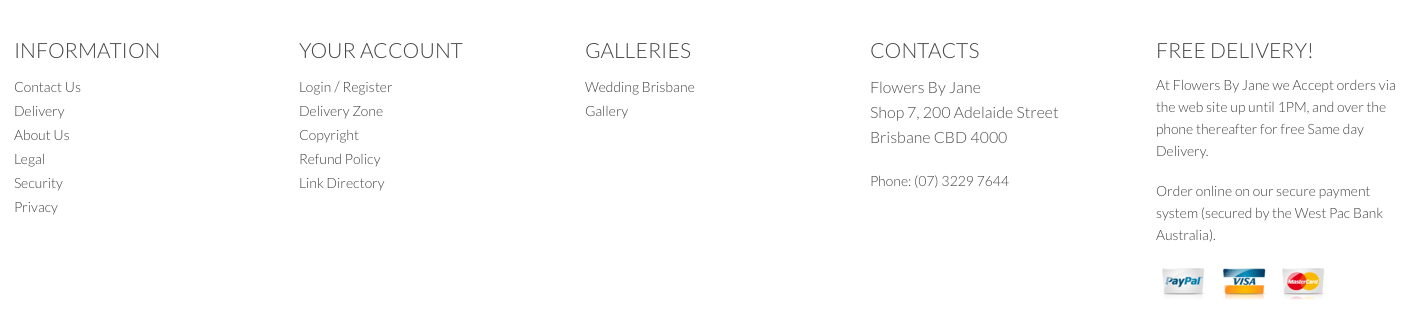
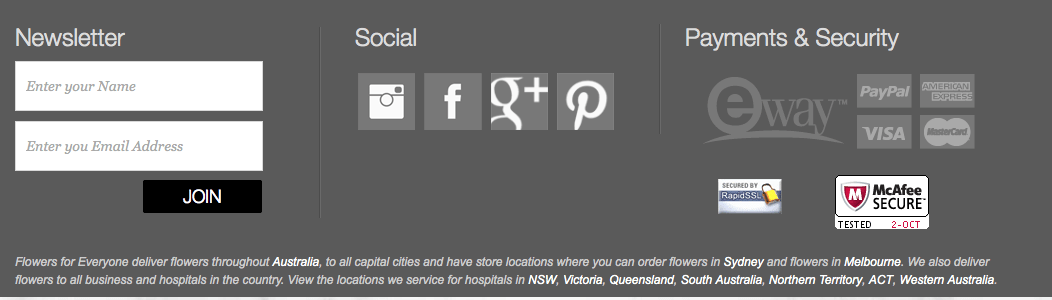
The footer will generally have all of your legal statements and security information. Most commonly these are the links in the footer:
This is where we set up the final details of your account and project. We will set up the web hosting account where your new website will be stored and we will configure the back end software and email you a login to the dashboard. You can expect this within 24 hours.
One of our team members will be allocated as your project leader and they will contact you to discuss the design approach for your new website. During this phase of the project they will send you design drafts for review and iterative design approach. At the completion of this your team leader will ask you to approve the design.
When the design has been approved the design will be cut and installed on your new website. If you have any custom code development this will be done during this period as well.
At any stage during the development of your website, content and products can be loaded on the website.
Before your website is launched we will go through your site and ensure that everything works. Before this we will also send you more information on setting of Google Analytics accounts, ideas for SEO and Marketing and we will also ask you to do test transactions.
Quick Links
Features